The Story Behind the Medusa:From Stillness to Flow
Since so many of you loved our recent Instagram reel about the origins of the Medusa, I thought it would be nice to share the full story here and add Devi’s insight to our ever-growing Origin Story Collection in the FCBDU resources.
In Greek mythology, Medusa was a beautiful woman transformed into a creature with snakes for hair, whose gaze could turn anyone who looked at her to stone. The statuesque figures in Medusa’s lair — especially in the 1981 film Clash of the Titans — were part of the initial spark of inspiration behind this beautiful movement.
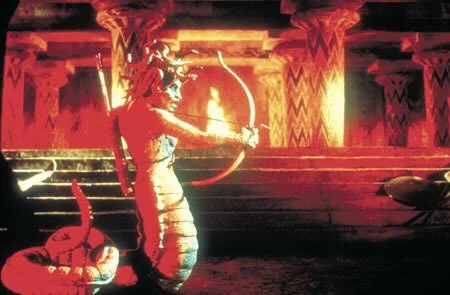
Medusa in Clash of the Titans
As Devi shares in her class, Medusa, on fcbdU.com:
The idea came to life while Devi was preparing a large stage piece set to the hauntingly beautiful “Bel” by Solace. With a troupe of thirteen dancers, she wanted something different — not a chorus line, but sculptural clusters of dancers holding striking, statuesque poses like living artwork.
But then she began to wonder — what if these shapes could move?
One day, while practicing at home, she noticed her partner, a Tai Chi teacher, gliding gracefully through his own movements. His smooth, effortless transitions inspired her to connect the poses into one fluid sequence — and that’s how the Medusa was born.
What began as a series of still shapes became a flowing, expressive movement — a perfect blend of strength and grace, stillness and transformation.
A little later, Variation Two (Indian version) came about when Devi and her troupe were invited to perform at an art gallery in New South Wales for the Goddess exhibition — an event that felt like the perfect setting for this evolution of the Medusa.
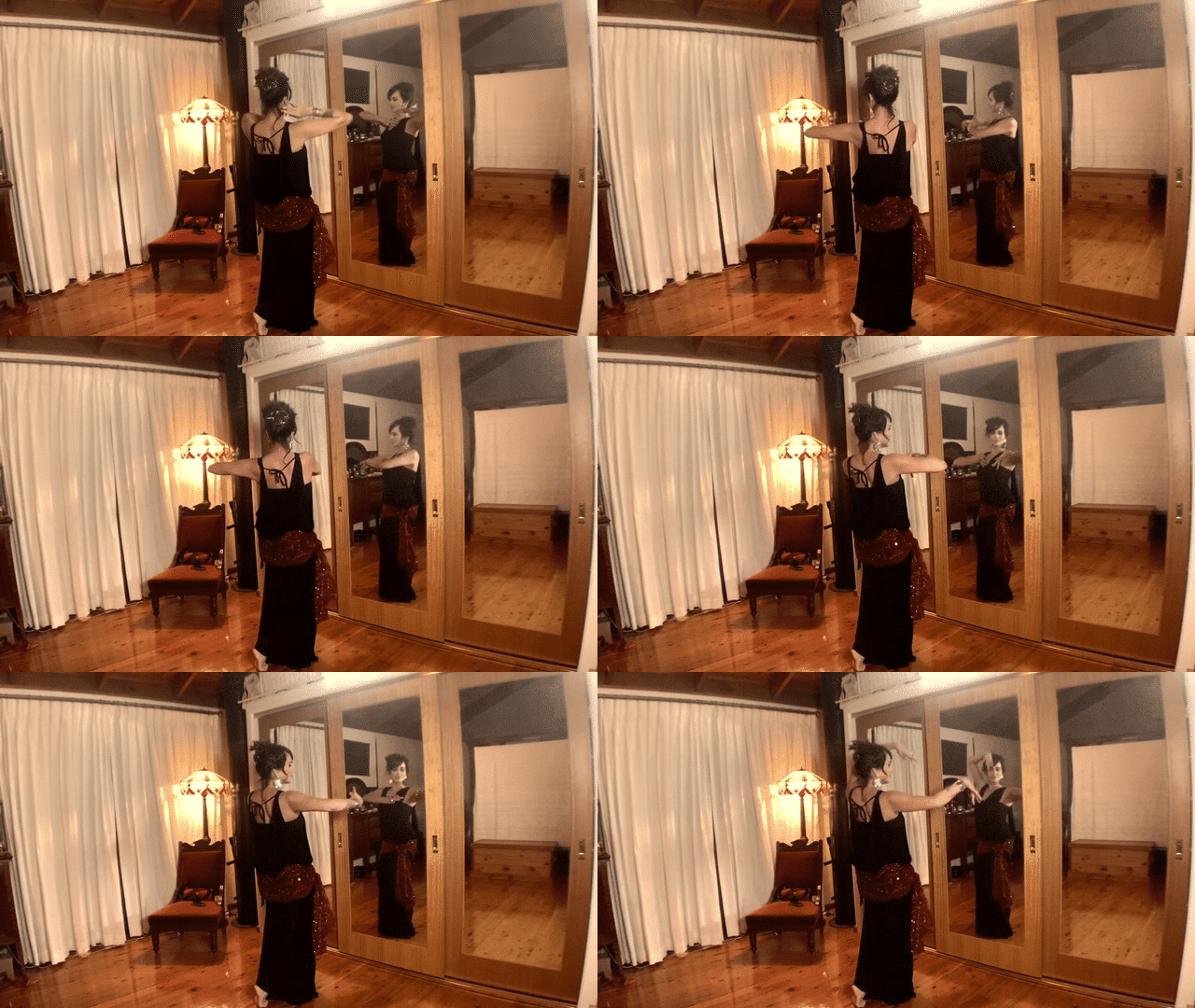
✨ Want to experience the Medusa for yourself?
Join Devi Mamak in her full Medusa class on FCBDU.com — or try her free Slow Drill session to explore this fluid, meditative movement.
If you like to hear stories about our dance, a reminder that Ask Carolena is today at 10am pacific. This is always a great conversation where Carolena answers any of your questions and shares stories full of rich history and inspiration!